
New Mexico Solar Incentives in 2026: After the Federal Tax Credit Ended
By the Epex Home Performance team
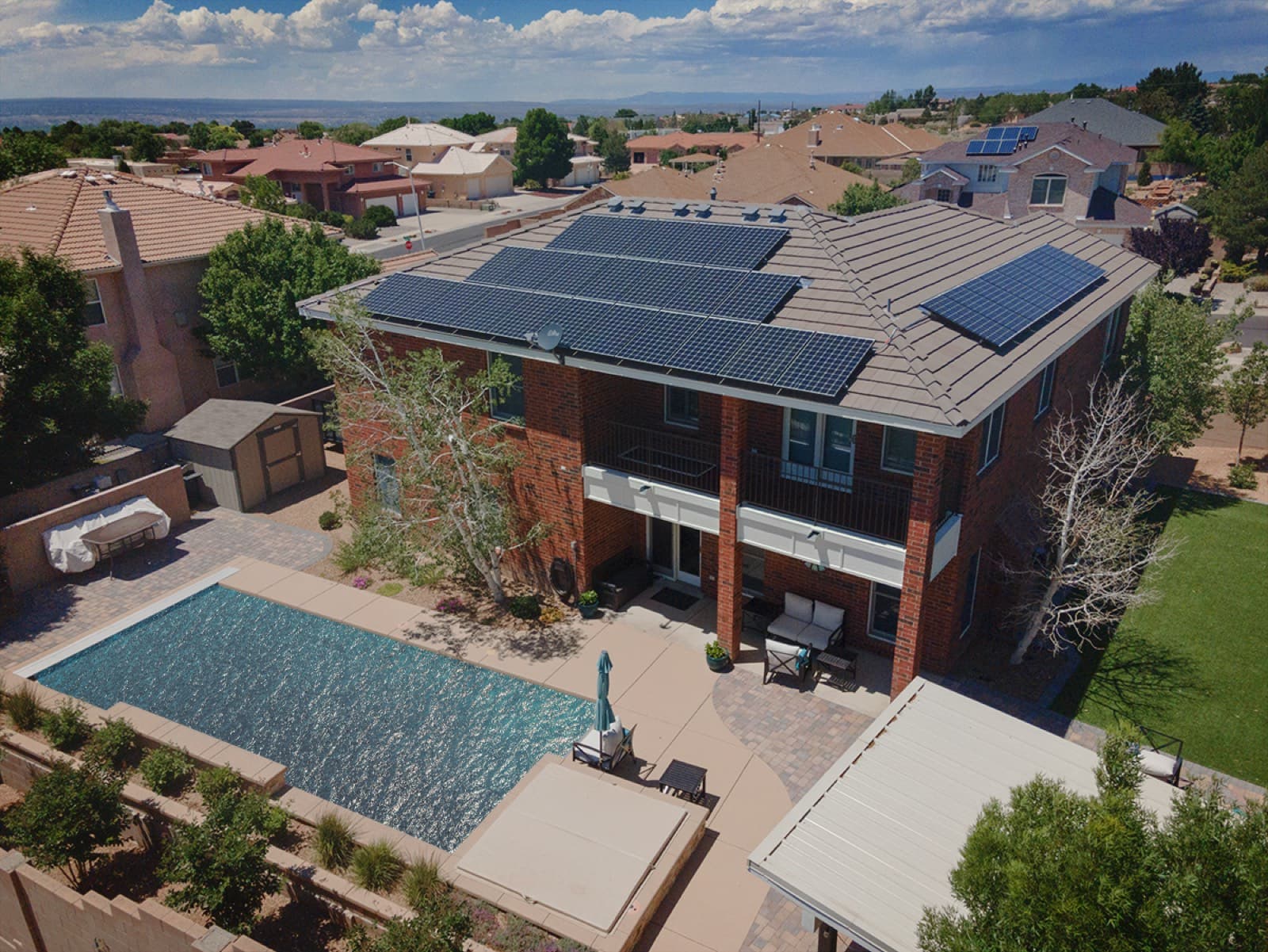
The federal 30% residential solar tax credit (Section 25D, often called the ITC) ended for homeowner-purchased systems placed in service after December 31, 2025, under the One Big Beautiful Bill Act signed in July 2025. If you're looking at solar in 2026, the headline math has changed — but New Mexico's state-level incentive stack is unchanged, and combined with rising PNM rates, solar still pencils out for many NM homeowners.
Here's a current breakdown of what's actually available to NM homeowners in 2026.
What changed
| Incentive | 2025 status | 2026 status |
|---|---|---|
| Federal 30% Residential Clean Energy Credit (§25D) | 30% of system cost, no cap | Ended for owned systems placed in service after Dec 31, 2025 |
| Federal commercial credit (§48E, third-party owners) | 30% to system owner | Still available through 2027-28; passed through in lease/PPA pricing |
| NM Solar Market Development Tax Credit | 10% up to $6,000, refundable | Unchanged |
| NM property tax exemption on solar | 100% exempt | Unchanged |
| NM gross receipts tax exemption on equipment | ~7.5% savings | Unchanged |
| PNM 1:1 net metering | Full retail credit | Unchanged (current PRC framework) |
The federal change is the big one. Everything below is still good news.
The NM state credit — still your biggest single incentive
The Solar Market Development Tax Credit (SMDTC) is now the largest single incentive available to NM homeowners who purchase their system.
- 10% of total system cost, capped at $6,000
- Refundable — you receive the full amount even if your NM state tax liability is smaller
- EMNRD certified — you submit a certificate application after install (program rules and application portal)
- First-come, first-served within annual funding allocations
- No scheduled sunset as of this writing
We handle the EMNRD paperwork for every customer.
Property tax exemption — silent compounding value
When solar adds value to your home, that added value is exempt from NM property tax assessment. The exemption is permanent and automatic — no application, no annual renewal.
On a $25,000 system in Bernalillo County, this works out to roughly $250–$350 per year in property taxes you don't pay, every year, for the life of the system.
Gross receipts tax exemption — point-of-sale savings
Solar equipment (panels, inverters, racking) is exempt from NM gross receipts tax. On a $25,000 system with around $20,000 in equipment, the exemption saves roughly $1,500 at the time of install. Your installer applies it automatically.
PNM 1:1 net metering — the long-term arithmetic
PNM credits you at the full retail rate for every kilowatt-hour your system exports to the grid (PNM's interconnection page has the current program terms). Sunny spring and summer months pile up credits; winter months draw them down. Many NM solar households end up paying close to PNM's minimum service charge most months.
Net metering policy is set by the NM Public Regulation Commission (PRC). Today's framework is 1:1 retail-rate. If the policy changes in the future, existing customers are typically grandfathered under the rules at the time of interconnection.
The lease and PPA pathway — how federal incentives can still flow through
The federal credit didn't disappear entirely — it shifted. The commercial credit (Section 48E) is still available to third-party owners of solar systems, which means solar leases and PPAs can still capture federal incentive value. Reputable installers pass that value through to the homeowner in lower monthly payments or cents-per-kWh pricing.
Some practical context:
- A solar lease is a predictable monthly payment for use of the system. The leasing company owns the equipment and claims the commercial credit.
- A PPA (power purchase agreement) is similar in structure, but you pay per kWh of solar energy produced — closer to a "utility you control" model.
- Cash and loan purchases maximize total lifetime return but no longer benefit from the federal credit. The NM state credit, property tax exemption, and net metering still apply.
Which structure is right depends on your tax situation, how long you plan to stay in the home, and your appetite for upfront cost vs. monthly payment. Epex offers all four structures (cash, loan, lease, PPA) and will walk through the trade-offs on a free consultation — no pressure to pick one path.
Example: a $25,000 system bought outright in 2026
| Item | Amount |
|---|---|
| System cost | $25,000 |
| NM Solar Market Development Tax Credit (10%, refundable) | −$2,500 |
| Gross receipts tax exemption on ~$20,000 equipment (~7.5%) | −$1,500 |
| Net upfront cost | ~$21,000 |
| Annual electric bill savings (typical Albuquerque home) | ~$2,000 |
| Annual property tax savings (no added assessment) | ~$300 |
| Combined annual benefit | ~$2,300/yr |
That's a payback period in the 9-year range at typical Albuquerque rates. Pre-OBBB math with the 30% federal credit got you closer to 5.7 years. The same system through a lease or PPA may pencil differently depending on how the third-party owner prices in their Section 48E credit — that's the conversation worth having with your installer.
PNM's rate increases (NMPRC-approved phases that took effect July 2025 and April 2026) push that payback timeline shorter over time. The faster grid rates climb, the more valuable on-site generation becomes.
How to claim what's available
- Install a qualifying system through a licensed installer (we're a NABCEP-led team)
- Submit an EMNRD application for the NM state credit as soon as your system is installed and inspected — funding is first-come, first-served
- Claim the SMDTC on your NM state return using PIT-1 + Schedule CIT, with your EMNRD certificate attached
- Property tax exemption is automatic — no application needed
- Gross receipts tax exemption is applied by your installer at the time of purchase
Always confirm your specific tax situation with a CPA or tax professional before relying on any incentive math.
Bottom line
The 2026 solar pitch in New Mexico is different from the 2025 pitch — but it's not a dead pitch. The state credit, property tax exemption, sales tax exemption, full net metering, lease/PPA pathways for capturing federal value, and rising PNM rates are all still on the homeowner's side. The math just looks different now, and the structure you pick matters more than it used to.
If you want a custom estimate for your home — one that's honest about the post-2025 federal landscape — get a free assessment or call us at 505-348-5571.
Sources: IRS — Residential Clean Energy Credit · EMNRD — Solar Market Development Tax Credit · PNM — Interconnection & net metering · DSIRE — New Mexico incentives
This article was updated May 13, 2026 to reflect the One Big Beautiful Bill Act and its impact on Section 25D. Tax credit eligibility depends on individual circumstances; consult a licensed tax professional before relying on any incentive figures.
Frequently Asked Questions
No — not for homeowner-purchased systems. The One Big Beautiful Bill Act (P.L. 119-21, signed July 4, 2025) terminated the Section 25D Residential Clean Energy Credit for property placed in service after Dec 31, 2025. Cash and loan-purchased systems installed in 2026 no longer qualify for the 30% credit. Solar leases and PPAs may still qualify under the commercial Section 48E pathway through 2027-28, and the value is typically passed through in the lease pricing. Confirm your specific situation with a tax professional.
Yes. The NM Solar Market Development Tax Credit (SMDTC) is still active and unchanged: 10% of system cost, capped at $6,000, refundable, and certified by the NM Energy, Minerals and Natural Resources Department (EMNRD). It applies to residential photovoltaic systems and has no scheduled sunset.
Indirectly, yes — through a solar lease or PPA (power purchase agreement). The commercial side of the credit (Section 48E) remains available to the third-party owner of the system, and reputable installers pass that value through to the homeowner in the form of lower lease or PPA pricing. If federal incentives matter to your budget, ask your installer which structure preserves them and how the value shows up in the contract.