
The Complete Guide to Solar Energy in New Mexico (2026)
By the Epex Home Performance team
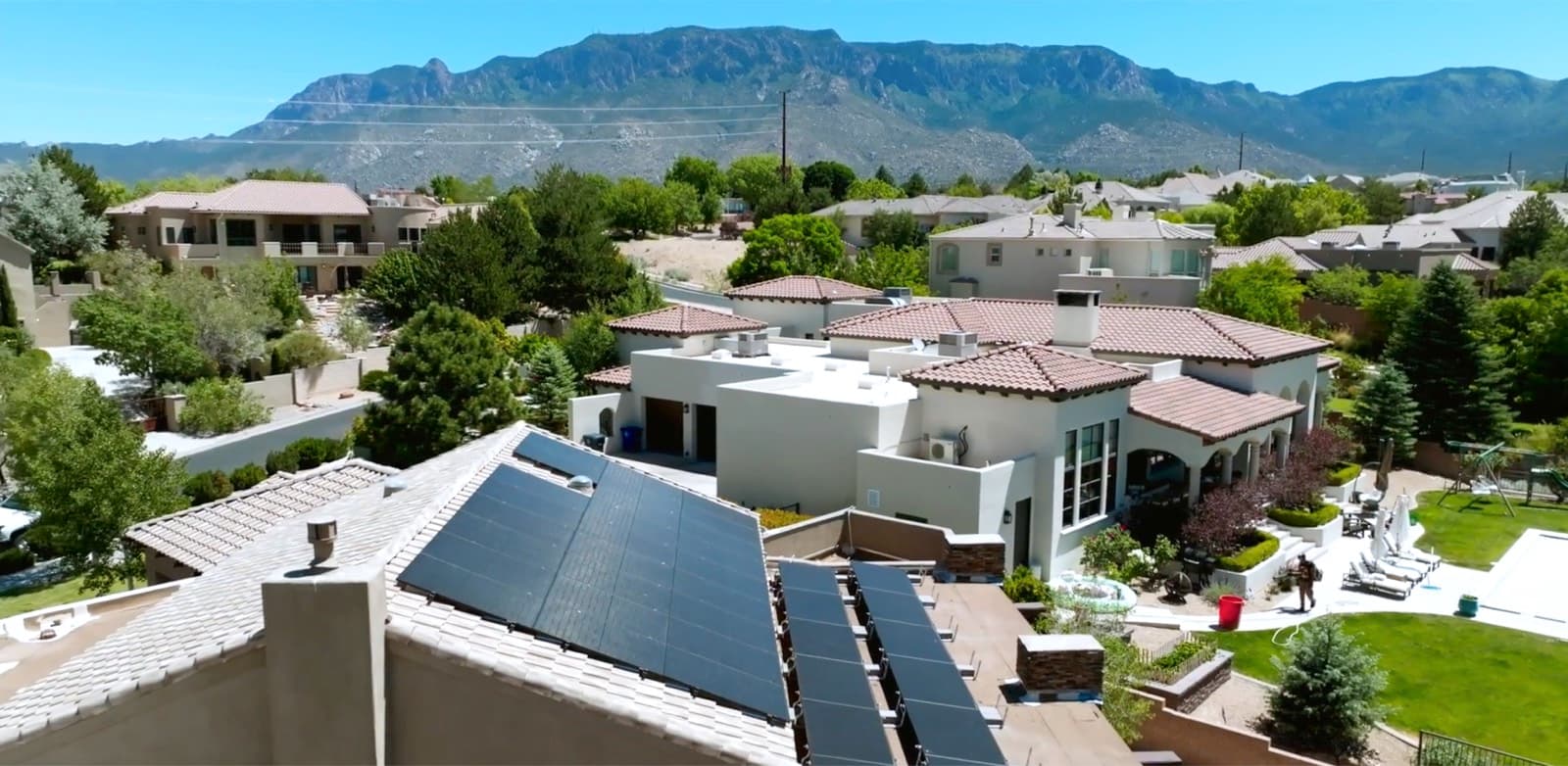
Solar installation in New Mexico costs $15,000–$30,000 before incentives. With 300+ sunny days per year and very high solar irradiance, Albuquerque homeowners can save $1,500–$2,400 annually on electricity — and PNM's NMPRC-approved rate increases keep pushing that benefit upward each year. The federal residential tax credit ended Dec 31, 2025 for owned systems, but New Mexico's state-level incentive stack (10% refundable state credit up to $6,000, property tax exemption, gross receipts tax exemption, full net metering) still delivers strong value. For homeowners who want federal incentive value in 2026, solar leases and PPAs remain a path through the commercial Section 48E credit.
Updated May 13, 2026 to reflect the One Big Beautiful Bill Act (P.L. 119-21, signed July 4, 2025), which terminated the Section 25D residential clean energy credit for property placed in service after Dec 31, 2025.
Why New Mexico Is One of the Best States for Solar
New Mexico ranks among the top three states in the U.S. for solar energy potential. That is not marketing — it is geography. The state receives over 300 days of sunshine per year, and Albuquerque averages 3,415 solar hours annually. For context, the national average sits around 2,500.
What does that mean for your electricity bill? It means a solar array on your roof in Albuquerque will generate significantly more energy per panel than the same array in Denver, Dallas, or Nashville. More production per panel means fewer panels to hit your energy goals, which translates directly to lower upfront costs.
There is also a financial urgency building. PNM, the primary utility serving central New Mexico, has implemented multiple rate increases over the past five years. The average residential electricity rate in New Mexico has climbed to approximately $0.14 per kWh and continues to trend upward. Every rate increase makes solar more valuable because your locked-in solar production offsets energy that costs more each year.
New Mexico Solar by the Numbers
- 300+ sunny days per year across the Albuquerque metro
- 3,415 solar hours annually in Albuquerque (vs. 2,500 national average)
- #3 in solar potential among all U.S. states (Solar Energy Industries Association)
- 6.1 peak sun hours per day on average — one of the highest in the country
- 28% average increase in PNM residential rates over the last decade
New Mexico's combination of intense solar irradiance, strong state incentives, and rising utility costs creates one of the most compelling cases for residential solar anywhere in the country.
How Much Does Solar Cost in New Mexico?
The honest answer: it depends on your home, your energy usage, and your goals. But we can give you realistic ranges based on what we install every week in the Albuquerque metro.
Average System Costs
Most residential solar installations in New Mexico fall between $15,000 and $30,000 before incentives. That is the gross cost — panels, inverters, racking, wiring, labor, permits, and everything else required to get your system operational.
The cost per watt in New Mexico currently averages $2.60 to $3.20 per watt (before incentives), depending on system size and complexity. For a typical Albuquerque home using 800-1,200 kWh per month, you are looking at a 6 to 10 kW system.
Here is what that looks like:
| System Size | Panels (approx.) | Gross Cost | After NM Credit (10%, capped at $6K) | After NM Credit + GRT Exemption |
|---|---|---|---|---|
| 6 kW | 15-16 | $17,000 | $15,300 | ~$14,300 |
| 8 kW | 20-22 | $22,000 | $19,800 | ~$18,500 |
| 10 kW | 25-28 | $28,000 | $25,200 | ~$23,700 |
(NM gross receipts tax exemption applies to the equipment portion of system cost — typically ~75-80% of total — at the local rate of ~7-8%.)
Factors That Affect Your Price
Not every installation is the same. Several factors push costs up or down:
- Roof complexity. A simple south-facing gable roof is the easiest and least expensive to install on. Multiple roof planes, dormers, skylights, or significant shading require more design work and hardware.
- Roof condition. If your roof needs replacement in the next 5-10 years, it makes sense to replace it first or at the same time. Installing solar on a roof that needs work means paying to remove and reinstall panels later.
- Electrical panel. Older homes with 100-amp panels typically need a panel upgrade to support a solar system. This adds $2,000-$4,000 to the project.
- System size. Larger systems cost more in total but less per watt. A 10 kW system is not double the price of a 5 kW system.
- Equipment quality. Tier-1 panels and microinverters cost more upfront but deliver better production, longer warranties, and fewer maintenance issues over 25 years.
- Battery storage. Adding a battery system adds $10,000-$20,000 to the project. Federal credits no longer apply to owned battery purchases in 2026, but lease and PPA structures may bundle battery and reflect federal commercial credit value in pricing.
What About $0-Down Solar?
Many homeowners go solar with nothing out of pocket. The four main paths in 2026:
- Cash purchase — best long-term ROI. You miss the federal credit (it's gone for owned systems post-2025) but capture all NM-level incentives.
- Solar loans — terms from 10-25 years at competitive rates. Monthly payments often lower than your current PNM bill. Cash purchase math, just spread over time.
- Home equity loans or HELOCs — low rates, potentially tax-deductible interest. Same ownership profile as a solar loan.
- Solar lease — fixed monthly payment, no upfront cost, leasing company owns the system and claims the Section 48E commercial credit. That credit value is reflected in your monthly payment.
- PPA (power purchase agreement) — same ownership structure as a lease, but you pay per kWh produced rather than a flat monthly amount. Also captures the commercial federal credit value through pricing.
We offer all of the above. The right path depends on your federal tax liability, how long you'll stay in the home, and your appetite for upfront cost vs. monthly payment. We'll model the trade-offs honestly during a free consultation — no pressure to pick the structure that pays us most.
New Mexico Solar Incentives and Tax Credits
New Mexico is still one of the most homeowner-friendly states for solar incentives even after the federal residential credit ended. The state stack remains strong, and lease/PPA structures preserve a path to federal value.
Federal Solar Tax Credit — What Changed in 2026
The Section 25D Residential Clean Energy Credit (often called the federal "ITC") that previously offered 30% off your system cost ended for property placed in service after Dec 31, 2025 under the One Big Beautiful Bill Act, signed July 4, 2025. Cash and loan-purchased residential systems installed in 2026 no longer qualify.
What's still available federally: The Section 48E commercial credit remains active through 2027-28 for third-party system owners. Reputable solar leases and PPAs capture this credit and pass the value through in their monthly pricing.
Bottom line: If federal incentive value matters to your budget, ask about lease and PPA structures. If you'd rather own outright, the NM state stack below carries the financial case.
New Mexico Solar Market Development Tax Credit — 10%
With the federal Section 25D credit no longer available for owned systems, the NM Solar Market Development Tax Credit (SMDTC) is now the single largest direct incentive available to NM homeowners who purchase their system outright — 10% of system cost, refundable, capped at $6,000.
- Amount: 10% of system cost, up to $6,000
- Type: Refundable — if the credit exceeds your state tax liability, you receive the difference as a refund
- Carry forward: Up to 10 years
- Eligibility: Primary or secondary residence in New Mexico
For a detailed walkthrough of what's available, how lease/PPA pricing reflects the federal commercial credit, and the EMNRD application process, read our guide to NM solar incentives in 2026.
PNM Net Metering
Net metering is what makes solar work financially for most homeowners. When your panels produce more electricity than you use during the day, the excess flows to the grid and PNM credits you for it. Those credits offset the electricity you pull from the grid at night.
Under PNM's current net metering program:
- You receive a one-to-one credit for excess energy sent to the grid
- Credits roll over month to month
- At the end of each 12-month billing cycle, excess credits are reconciled
- Systems up to 10 kW are eligible for residential net metering
This effectively allows you to use the grid as a free battery — producing during the day and drawing credits at night.
Property Tax Exemption
New Mexico exempts the added value of a solar system from your property taxes. Your solar panels increase your home's market value — studies show an average increase of $15,000-$20,000 for a typical residential system — but you will not pay a penny more in property taxes.
Sales Tax Exemption
Solar energy systems are exempt from New Mexico gross receipts tax. On a $25,000 system, this saves roughly $1,800-$2,100 depending on your local tax rate.
Combined Savings Example — Owned System in 2026
For a $25,000 owned solar installation in Albuquerque:
| Incentive | Savings |
|---|---|
| Federal Section 25D (residential) | $0 (ended Dec 31, 2025) |
| NM State Credit (10%, refundable, $6K cap) | $2,500 |
| Gross Receipts Tax Exemption (~7.5% on equipment) | ~$1,500 |
| Total upfront incentive savings | ~$4,000 |
| Your net upfront cost | ~$21,000 |
The 2026 owned-system math relies more heavily on ongoing energy savings and the property tax exemption than the pre-OBBB picture did. A lease or PPA structure on the same system would shift the trade-off — closer to $0 upfront and a monthly payment reflecting captured federal commercial credit value.
How Much Can You Save?
Solar savings depend on your current electricity usage, your system size, and PNM's rate structure. But the numbers for New Mexico are strong.
Average Annual Savings
Most Albuquerque homeowners save between $1,500 and $3,000 per year on electricity after going solar. Homes with higher energy usage — large homes, pools, electric vehicles — often save more.
Payback Period
The payback period is how long it takes for your cumulative energy savings to equal your net system cost. For owned systems in 2026, most NM installs pay for themselves in roughly 9 to 12 years — longer than pre-2026 systems that had the federal credit, but still well within the 25-year warranty window. PNM's NMPRC-approved rate increases keep pushing that payback shorter over time. Lease and PPA payback math works differently (typically immediate monthly savings, no upfront cost).
25-Year Value
Solar panels are warrantied for 25 years and typically produce well beyond that. Over 25 years, a typical Albuquerque solar installation generates $40,000 to $75,000 in cumulative energy savings — and that assumes only modest utility rate increases.
Your Home's Value
According to Zillow research, homes with solar sell for approximately 4.1% more than comparable homes without it. For a $350,000 Albuquerque home, that is roughly $14,000 in added value — and remember, New Mexico's property tax exemption means that added value does not increase your tax bill.
The Solar Installation Process
Going solar involves several steps, but a good installer handles the complexity so you do not have to. Here is what to expect from start to finish.
Step 1: Free Consultation and Site Assessment
Everything starts with a conversation about your goals and a review of your home. We look at:
- Your electricity bills (12 months of usage data)
- Your roof's age, condition, orientation, and shading
- Your electrical panel capacity
- Any planned changes (EV, pool, home addition)
This step is always free, and there is never any obligation. Schedule yours here.
Step 2: Custom System Design
Our engineering team designs a system tailored to your home and energy usage. You will receive a detailed proposal showing:
- Recommended system size and panel layout
- Projected annual production
- Estimated savings over 25 years
- All applicable incentives and net cost
- Financing options and monthly payment estimates
Step 3: Permitting and Utility Coordination
Once you approve the design, we handle all the paperwork:
- City/county building permits — we prepare and file the application
- PNM interconnection application — required before your system can connect to the grid
- HOA approval (if applicable) — we prepare the documentation
This step typically takes 2-3 weeks. New Mexico law prohibits HOAs from banning solar installations, though they can set reasonable aesthetic guidelines.
Step 4: Installation
Installation day is when the project gets tangible. For a typical residential system:
- Duration: 1-3 days depending on system size and complexity
- Crew: 3-5 installers, all trained and certified
- Process: Racking goes on the roof, then panels, then wiring down to inverters and your electrical panel
- Disruption: Minimal. Your power stays on during installation. You may hear some drilling and foot traffic on the roof.
Step 5: Inspection and PNM Interconnection
After installation, two things need to happen before your system goes live:
- City/county inspection — a building inspector verifies the installation meets code
- PNM interconnection approval — PNM installs a bidirectional meter and authorizes your system to connect
This final step takes 1-2 weeks. Once PNM gives the green light, we flip the switch and your system starts producing.
Total Timeline
From signed contract to powered-on system, expect 4 to 8 weeks. The installation itself is quick — most of the timeline is permitting and utility coordination, which we manage entirely for you.
Choosing the Right Solar Installer
The solar industry has its share of high-pressure salespeople and fly-by-night operations. Here is how to find an installer you can trust.
Look for NABCEP Certification
The North American Board of Certified Energy Practitioners (NABCEP) is the gold standard for solar installer certification. NABCEP-certified installers have demonstrated knowledge, skill, and experience through rigorous testing and continuing education.
Not every solar company employs NABCEP-certified installers. Ask specifically.
Evaluate Warranty Coverage
Your solar system has multiple warranty layers. Make sure you understand all of them:
- Panel warranty: Typically 25 years for production, 12-25 years for equipment defects
- Inverter warranty: 12-25 years depending on the brand
- Workmanship warranty: Covers the installation itself — this varies widely by installer. Ask for a minimum of 10 years.
- Roof penetration warranty: If the installer drills into your roof (they will), they should warrant those penetrations against leaks
Local vs. National
National solar companies (like those running TV ads) have lower installation costs due to scale, but they also have higher customer acquisition costs, less familiarity with local permitting, and often subcontract the actual installation to local crews anyway.
A local installer typically offers:
- Faster response times for service and warranty issues
- Deeper knowledge of local building codes, utility programs, and climate conditions
- Direct accountability — you know where their office is
Questions to Ask Any Solar Installer
- Are your installers NABCEP certified?
- Do you subcontract installations or use your own crews?
- What is your workmanship warranty?
- How do you handle roof penetration warranties?
- Can you provide references from customers in my area?
- Will you handle all permitting and utility coordination?
- What happens if I need service after installation?
- Do you offer monitoring so I can track my system's performance?
Solar and Your Roof: What You Need to Know
Your roof and your solar panels are going to spend 25+ years together. Making sure they are compatible from the start prevents expensive problems later.
Roof Condition Assessment
Before any reputable installer puts panels on your roof, they should assess its condition. If your roof has 10 or more years of life remaining, it is generally fine to install solar directly. If your roof is nearing the end of its life, you should strongly consider replacing it first.
Why? Removing solar panels to replace a roof costs $2,000-$5,000 in labor. Doing both projects together eliminates that future cost and often qualifies for bundled pricing.
Roof Age and Material Compatibility
Solar panels work well with most common roofing materials:
- Asphalt shingles: The most common roofing material in Albuquerque. Excellent for solar — standard racking systems attach directly through the shingles into the roof deck.
- Metal roofing: Ideal for solar. Clamp-on racking systems attach without any roof penetrations, preserving your metal roof warranty.
- Tile (concrete or clay): Compatible but requires more careful installation. Tiles are removed and replaced around mounting points.
- Flat/TPO roofs: Common in New Mexico's pueblo-style architecture. Ballasted or mechanically attached racking systems work well on flat roofs.
The Advantage of Doing Both Together
If your roof is 15+ years old and you are considering solar, doing both projects with one contractor has significant advantages:
- One timeline instead of two separate disruptions
- Coordinated engineering — the roof is designed to support the solar array from day one
- Single permit process — less paperwork and faster approval
- Bundled pricing — lower total cost than doing the projects separately
- One warranty relationship — no finger-pointing between a roofing company and a solar company if an issue arises
This is one of the core reasons Epex offers both solar installation and roof installation as an integrated service.
Battery Storage: Is It Worth It?
Home battery systems have become a mainstream option alongside solar. But they are not right for every homeowner. Here is a straightforward assessment.
When Batteries Make Sense
Power outage protection. If you experience outages — even occasionally — a battery keeps your lights on, your refrigerator running, and your critical circuits powered. Solar panels alone shut down during outages for safety reasons (anti-islanding). A battery with a transfer switch keeps your home running independently.
Time-of-use rate optimization. If PNM moves toward time-of-use rates (charging more during peak evening hours), a battery lets you store cheap daytime solar and use it during expensive peak periods.
Maximum energy independence. Some homeowners want to minimize their grid dependence as much as possible. A properly sized battery can cover 80-100% of overnight energy needs.
When You Can Probably Skip It
PNM's net metering is strong. Right now, PNM's net metering program gives you one-to-one credits for excess solar. That means the grid acts like a free battery. As long as net metering remains favorable, the financial case for a battery is weaker.
Budget is a concern. A single battery (like the Tesla Powerwall or Enphase IQ Battery) adds $10,000-$15,000 to your system. For many homeowners, that money generates better returns invested in a larger solar array.
For a deeper analysis, read our battery storage guide.
Battery Costs and Incentives
- Typical cost: $10,000-$20,000 installed (depending on capacity)
- Federal credit: Standalone battery purchases no longer qualify for a federal residential credit post-OBBB. Batteries bundled into a new solar lease or PPA may reflect federal Section 48E value through the pricing.
- Lifespan: Most batteries are warrantied for 10 years or 70% capacity retention
Frequently Asked Questions
Do solar panels work on cloudy days?
Yes. Solar panels produce electricity from all daylight, not just direct sun. On a cloudy day in Albuquerque, your system will produce roughly 25-40% of its full-sun output. Given that Albuquerque has over 300 sunny days per year, cloudy-day production is a minor factor in your annual total.
Will solar damage my roof?
No. A properly installed solar system actually protects the portion of roof underneath the panels from UV exposure and weather. The mounting hardware is installed through the roofing material into the roof deck with waterproof flashing at every penetration point.
How long do solar panels last?
Modern solar panels are warrantied for 25 years and typically continue producing at 80-85% of their original capacity well beyond that. Many systems installed in the early 2000s are still performing above warranty specifications. The panels themselves have no moving parts and require virtually no maintenance.
What maintenance do solar panels need?
Very little. In Albuquerque's dry climate, rain usually keeps panels clean enough. If you notice a production drop, a simple rinse with a garden hose is sufficient. We recommend a professional inspection every 3-5 years to check electrical connections and mounting hardware.
Can I go completely off-grid?
Technically yes, but it is rarely practical or cost-effective in an urban area like Albuquerque. A fully off-grid system requires significantly more panels and batteries than a grid-tied system, often doubling or tripling the cost. For most homeowners, a grid-tied system with net metering provides the best balance of savings and reliability.
What happens if I sell my home?
Solar panels are a selling point. Homes with solar sell faster and for more money — about 4.1% more according to Zillow. The system transfers to the new owner. If you have a solar loan, it can typically be paid off at closing or assumed by the buyer depending on the lender.
Does Epex offer monitoring?
Yes. Every system we install comes with production monitoring that you can access from your phone or computer. You can see real-time production, daily and monthly totals, and historical performance. If something is off, we often know before you do.
How do I get started?
The first step is a free, no-obligation consultation. We will review your electricity usage, assess your roof and electrical system, and provide a detailed proposal showing your costs, incentives, and projected savings. Schedule your free consultation or call us at 505-348-5571.
Next Steps
Going solar in New Mexico is one of the smartest financial decisions a homeowner can make. The combination of intense sunshine, generous incentives, and rising utility rates creates a payback period that is hard to beat anywhere else in the country.
If you are ready to explore solar for your home, here is what to do:
- Request a free consultation — we will assess your home and give you a detailed, no-pressure proposal
- Review your proposal — take your time to understand the costs, savings, and financing options
- Choose your path — cash, financing, or a bundled project with roofing or windows
Every Epex consultation is free, and every proposal is honest. We would rather tell you solar does not make sense for your home than sell you a system you do not need. That is how we have built our reputation in the Albuquerque market — one homeowner at a time.
Call us at 505-348-5571 or schedule online.
Frequently Asked Questions
Often yes — even after the federal residential tax credit ended Dec 31, 2025. New Mexico still ranks near the top of US states for solar potential (300+ sunny days, very high irradiance), the state's 10% refundable Solar Market Development Tax Credit is still active (capped at $6,000), and PNM's NMPRC-approved rate increases keep making on-site generation more valuable. Payback periods are typically in the 9-12 year range for an owned system in 2026, with lease and PPA structures offering different trade-offs.
Most residential systems cost $15,000–$30,000 before incentives. After New Mexico's 10% refundable state tax credit (up to $6,000), 100% property tax exemption, and gross receipts tax exemption on equipment, net upfront cost drops by roughly $4,000–$6,000 on a typical system. Federal incentives no longer apply to owned residential systems in 2026, but lease and PPA structures may reflect federal commercial credit value in their pricing.
Four state-level incentives still apply for owned systems: the 10% NM Solar Market Development Tax Credit (refundable, up to $6,000), PNM 1:1 net metering, 100% property tax exemption on added home value, and a gross receipts tax exemption on solar equipment (~7.5%). For federal incentives, the Section 25D residential credit ended Dec 31, 2025, but the Section 48E commercial credit remains available to third-party owners — so solar leases and PPAs may still capture federal value through their pricing.
Look for NABCEP-certified installers on the team, local installation experience, strong workmanship warranty terms, transparent pricing, and verified reviews. Ask whether they offer multiple ownership structures (cash, loan, lease, PPA) so they can recommend the right fit for your tax situation — not just the structure that maximizes their margin.